Eva
The Woman in Cabin 10Eva is a spa employee aboard the Aurora Borealis whose apparently routine work places her close to the vessel’s hidden spaces, restricted information, and disputed movements. She organizes treatments, controls access to the spa, relays messages, and presents herself as a reassuring professional presence. Yet Laura Blacklock discovers that Eva was not present throughout the period she later describes, making Eva one of the ship’s most significant ambiguous figures: neither openly accused nor cleared, but positioned where service, surveillance, and possible concealment overlap.
Identity and Introduction
Eva first appears when Karla introduces her to Laura as a colleague. She is the person who manages the spa’s practical operations and speaks to guests in a polite, measured manner. Her authority is modest but real: she can determine where treatments occur, regulate access to equipment and information, direct guests through the vessel’s concealed architecture, and explain the procedures governing the rooms below deck.
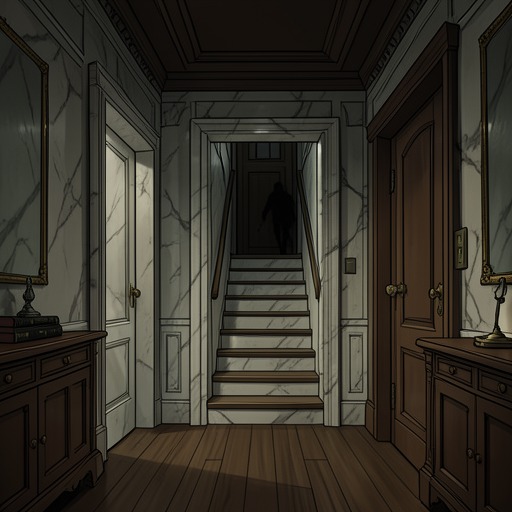
Her professional manner is part of the Aurora Borealis’s larger performance of luxury. The ship presents itself through polished welcomes, formal hospitality, champagne, elaborate decoration, and carefully organized activities, and Eva extends that presentation into the spa. Her courtesy does not make the environment transparent, however. The spa is reached through a mirrored door hidden behind a desk, and the transition from the bright reception room to the cramped, dark staircase below deck immediately complicates the promise of comfort that Eva represents.
The Spa and Its Hidden Architecture
Eva interrupts Tina West’s unauthorized use of the spa laptop when she emerges through the concealed opening. She explains that the computer contains client lists and confidential information and that guests are not permitted to use it. Rather than openly reprimanding Tina, she offers to arrange a computer for her cabin, preserving the surface of hospitality while reasserting control over restricted information. When Tina supplies the weak explanation that she was looking for the treatment list, Eva responds with professional generosity and offers to print one, but her appraising look indicates that she has noticed the excuse.
Eva then manages the spa’s schedule. She tells Laura, Tina, and Chloe Jenssen that there are three treatment rooms below deck in addition to the chair upstairs, allowing therapies to run concurrently. Tina is assigned aromatherapy with Hanni, Chloe a facial with Klaus, and Laura a mud wrap with Ulla. The arrangement gives Eva precise knowledge of who should be in each room and when, while the physical layout creates a series of isolated spaces in which a guest may be out of sight of others.
The route itself intensifies the spa’s ambiguity. Eva leads the women down a narrow staircase lit by small electric tea lights, where the low ceiling, cramped air, darkness, and movement of the ship produce vertigo and unease. She later explains that the mirrored door is the only entrance but not the only exit: an alarmed fire exit below leads outward into the staff quarters and opens in one direction only. Her explanation supplies Laura with a map of a concealed passage and confirms that the spa connects the guest areas to the employees’ hidden domain.
Information, Messages, and Suspicion
Eva also functions as an information relay. After Laura finishes her treatment, Eva tells her that Ben Howard came looking for her, that she had explained Laura was undergoing treatment, and that Ben had gone downstairs to leave a message with Ulla. Laura asks whether anyone else went down, and Eva says no. This answer gives Eva a specific position in the chain of knowledge surrounding movement through the spa: she knows who sought Laura, what explanation was given, and who may have entered the lower area.
That apparent control becomes doubtful when Ben later tells Laura that Eva was not present when he returned upstairs. Anne Bullmer was there, waiting for her nail varnish to dry, but Eva had disappeared. Ben therefore concludes that if Eva claims to have remained in the area throughout, she is not telling the truth. The discrepancy is consequential because Laura had been lying beneath thin wraps and towels in an exposed, secluded room; if Eva was absent, another person could have entered without being observed. Eva’s uncertain whereabouts transform the spa from a site of pampering into a possible route for intimidation or attack.
The issue is not merely whether Eva personally committed an act. Her importance lies in the institutional conditions her role reveals. The ship’s staff are expected to maintain calm, protect confidential information, and preserve the voyage’s appearance of flawless control. At the same time, the Aurora Borealis is on its maiden voyage, crowded with journalists, photographers, and influential guests. An unexplained death could damage the entire enterprise and threaten the jobs of everyone from the captain to the cleaner. Within that pressure, a staff member’s silence, omission, or carefully managed explanation can serve the organization even without a clearly stated conspiracy.
Relation to the Ship’s Crisis
Eva’s conduct parallels the broader effort to keep the cabin 10 incident from becoming an official emergency. When Laura reports that a woman may have been thrown overboard, Johann Nilsson insists that there is no proof and proposes waiting until morning, while suggesting that the staff can help identify the woman she saw. The response treats Laura’s account as a problem of insufficient evidence and possible confusion rather than as an immediate danger. Eva’s spa administration operates on the same contested boundary: she provides explanations and assistance, but the spaces she controls also make disappearance and unobserved movement possible.
The spa’s concealed doors and staff connection give Eva unusual narrative significance despite her limited appearance. She is not the architect of the central deception, and the available evidence does not establish that she knows the truth about the missing woman. Nevertheless, she embodies the vessel’s layered structure. Guests see polished service on the upper decks; employees move through restricted corridors and rooms below; information is divided according to role; and explanations are offered in ways that keep anxiety from spreading. Eva stands at the threshold between those worlds.
Narrative Role and Significance
Eva is characterized through a tension between courtesy and opacity. Her calm tone, willingness to print treatment information, and practical scheduling suggest competence, while her control of confidential data and knowledge of hidden entrances make her a guardian of the ship’s backstage. The later report of her absence does not resolve that tension; it sharpens it. She may be an ordinary worker caught inside a dangerous system, or a participant whose professional composure helps conceal what happened, but the evidence deliberately leaves her in the unstable space between those possibilities.
As a result, Eva contributes to the novel’s treatment of unreliable testimony and institutional self-protection. Laura’s account is repeatedly challenged because she has been drinking, is anxious, and lacks physical proof, while the ship’s staff possess the practical authority to define what counts as a problem and who was present. Eva’s missing interval exposes how fragile that authority is. A schedule, a locked or hidden door, a message left downstairs, and a disputed account of who was in the spa can matter as much as a visible object. Through Eva, the Aurora Borealis’s promise of luxury becomes inseparable from its capacity to regulate visibility, movement, and belief.